Opened in 2013 by Richard Holmes and Benny Peverelli, this gastropub serves craft brews from the UK and abroad and a great selection of artisan gins and homemade soft drinks – best enjoyed with a pie or hot Scotch egg. The restaurant area offers a more extensive menu, with meat cooked over a charcoal spit roast (try the devilled kebab with marinated pork belly).
In 2017, Steak & Honour added a bricks-and-mortar site to its fleet of street-food vans. The offering remains the same: a brioche bun with lettuce, onions, gherkins, mustard, ketchup and a thick, juicy Riverside Beef patty, made from cattle that graze by East Anglian waterways.
On the site of what claimed to be the first bike shop in Britain (Howes Cycles, which is said to have counted Charles Darwin among its customers), the Old Bicycle Shop is open all day for brunch, lunch, dinner and drinks. There’s a varied menu, from wild mushroom ramen to fillet steak and chips, and the cocktail list has plenty of tempting options.
This is a haven of barbecue, beer and bourbon, offering finger-licking buns, wings and ribs. Try the deep-cut St Louis pork ribs, cooked low and slow and slathered in a sticky BBQ sauce. There are two SmokeWorks joints – one in the centre of Cambridge and one towards the south-east of the city.
This iconic tearoom down the road from the Fitzwilliam Museum was rescued from closure in 2011 by food writer Tim Hayward. Its sticky Chelsea buns are a local institution. As well as being a great spot for afternoon tea, it also offers a bespoke hamper service of finger sandwiches, scones and cakes, perfect for a picnic on The Backs (the grassy banks of the Cam behind King’s College) or on a punt down the river.
This is an independent real-ale pub just off Parker’s Piece. Try the glazed, smoked shoulder gammon with poached eggs and chips, or check out the ever-changing specials list for more creative dishes, like roast garlic, white bean & macaroni pie or crisp fried panko pork belly dumplings. On Sundays, the menu is limited to classic roasts. It’s a small, popular neighbourhood pub, so booking ahead is advised.
[/vc_column_text][/vc_column][/vc_row][vc_row gap=”25″][vc_column width=”1/2″][vc_single_image image=”7979″ img_size=”800X530″ css=””][vc_column_text]Blue Ball Inn
This small, cosy pub is believed to have been named after a hot-air balloon that once landed in the nearby meadows. The beers are all East Anglian (with at least one ale from Adnams always on tap) and the menu features simple, hearty home-cooked dishes such as roast beef, chilli con carne and sausage casserole, all for around £9. Soups and filled rolls are also available. There are a couple of B&B rooms available, and there’s often live music on Thursday evenings. You may recognise the landlord and pub from ITV drama Grantchester.
This unique hangout spot opened in the city’s east in 2015. Start your day in a multi-format space centred around a love of road cycling, healthy food, local art and great coffee. Try the mashed avocado and smoky chickpeas on toasted sourdough for a filling breakfast, washed down with a cup of coffee made from the ever-changing roster of beans.
This colourful collective of street-food trader’s pops up at various locations around the city and is where you’ll find the next generation of food businesses in Cambridge. Traders include Guerilla Kitchen, which serves up delicious steamed bao buns and Kura Kura, which concentrates on Sri Lankan and south Indian curries.
After a few summers selling from his tricycle, ex-chef Jack van Praag opened a shop on Bene’t Street. The menu of freshly made ice cream and gelato changes daily, and features incredible flavours like raspberry and red wine or goat’s milk and wild honey. It’s open late, so you can enjoy a postprandial evening stroll with a cone and pretend you’re in Italy
[/vc_column_text][/vc_column][/vc_row]
[vc_row gap=”25″][vc_column width=”1/2″][vc_single_image image=”7961″ img_size=”800X530″ css=””][vc_column_text]The Blue Ball, Grantchester
While vast swathes of Cambridge’s pubs fall over themselves to bag a refurb and hawk artisan beer and food on slates, the Blue Ball recalls a simpler time and remains a true original – no nonsense drinks, no nonsense decor and a no nonsense landlord.
[/vc_column_text][/vc_column][vc_column width=”1/2″][vc_single_image image=”7962″ img_size=”800X530″ css=””][vc_column_text]Water flumes at Parkside Pools
A childhood staple for a generation of Cambridge kids and probably the most fun you can have in CB1 for less than a fiver.[/vc_column_text][/vc_column][/vc_row][vc_row gap=”25″][vc_column width=”1/2″][vc_single_image image=”7963″ img_size=”800X530″ css=””][vc_column_text]Reality checkpoint
Much like standing in the very middle of the Oxford Circus crossing feels like you’re at the epicentre of London, standing next to Reality Checkpoint on Parker’s Piece invokes a similar sense of satisfaction. A brilliant place to visit if you need to get a new grasp on reality.
[/vc_column_text][/vc_column][vc_column width=”1/2″][vc_single_image image=”7964″ img_size=”800X530″ css=””][vc_column_text]Pottering on the river
Forget the colleges, grab a canoe and head off in the opposite direction for a much more relaxing trip. There are cows. A heron lives there. The Mill will do you a huge jug of beer to take with you, so you can drink in the canoe. It’s way better than punting.
[/vc_column_text][/vc_column][/vc_row][vc_row gap=”25″][vc_column width=”1/2″][vc_single_image image=”7965″ img_size=”800X530″ css=””][vc_column_text]The Centre for Computing History
Geographically apart from Cambridge’s museum circuit (it’s in Coldham’s Road), but every bit as fascinating if you remember Jet Set Willy and waiting hours to play a 48k computer game that will never load.
Try walking along here in a snow shower and not uttering the words “Christmas”, “card” “looks” and “like”. Never going to happen.
[/vc_column_text][/vc_column][/vc_row][vc_row gap=”25″][vc_column width=”1/2″][vc_single_image image=”7967″ img_size=”800X530″ css=””][vc_column_text]A church with a difference
All Saints’ Church’s on Jesus Lane has a breath-taking interior which is a triumph of Victorian art and design. Light gleams through stained-glass windows, designed by leading Arts and Crafts artists, including William Morris, Edward Burne-Jones and Ford Madox.
[/vc_column_text][/vc_column][vc_column width=”1/2″][vc_single_image image=”7968″ img_size=”800X530″ css=””][vc_column_text]Cambridge food Park
Who needs a restaurant when some of the best food can be enjoyed on the street corner? Enjoy a whole host of different food from Steak & Honour burgers to Bao delicacies from Guerilla Kitchen.
[/vc_column_text][/vc_column][/vc_row]
[vc_row][vc_column][vc_column_text]Famous the world over for its university, Cambridge lays claim to having one of the highest concentrations of preserved historic buildings anywhere in England[/vc_column_text][/vc_column][/vc_row][vc_row gap=”25″ full_height=”yes” columns_placement=”stretch”][vc_column width=”1/2″][vc_single_image image=”7947″ img_size=”800X530″ css=””][vc_column_text]
King’s College and King’s College Chapel
Founded in 1441 by Henry VI and the earliest of the royal foundations, King’s College is worth visiting for the huge expanse of lawn extending down to the river and King’s Bridge. Here, you’ll enjoy lovely views of the Backs, the various college grounds along the riverside. Distinguished alumni include writer Horace Walpole, poet Rupert Brooke, and economist Lord Keynes. A must-see here is King’s College Chapel. Renowned for its 12-bay perpendicular-style interior, as well as its breathtaking fan vaulting by John Wastell (1515), it’s a must-see in Cambridge. Also worth checking out: the lovely tracery on the windows and walls; the spectacular 16th-century stained-glass windows; the lavishly carved 16th-century wooden organ screen and choir stalls; and the altarpiece, Rubens’ Adoration of the Magi (1634). Address: King’s Parade, Cambridge
Founded in 1448 by Andrew Dockett under the patronage of Margaret of Anjou, wife of Henry VI, Queens’ College was refounded in 1465 by Elizabeth Woodville, wife of Edward IV. It has the most complete medieval buildings of all Cambridge’s colleges, including the magnificent gateway leading to the red brick First Court, dating from the period of foundation.
Other Queens’ College sites to visit include the wooden Mathematical Bridge. This 1902 reconstruction leads over the Cam to the lovely college gardens, and is so called because it was built without nails, relying for its strength on meticulous calculation.
Also worth seeing are Cloister Court (1460) with the President’s Lodge — a handsome half-timbered building — and Pump Court with the Erasmus Tower above the rooms, occupied by Erasmus when he taught Greek here (1511-1514).
Walnut Tree Court (1618) and Friars Court with the Erasmus Building (1961) and Victorian chapel (1891) are also worth seeing.
Covering an area of some 40 acres, a visit to Cambridge University Botanic Garden is a must-do for gardening enthusiasts. Established in 1831, the garden showcases an impressive collection of more than 8,000 species of plants from across the globe.
Be sure to spend time wandering through the garden’s many glasshouses and trails, something that can be done as part of a guided tour (free on Sundays). Afterwards, visit the Garden Café and Botanic Garden Shop.
Be sure to check out their website for news of upcoming events and festivals.
Great St. Mary’s Church is both a parish and university church. Built in the 15th century, it has a fine interior, its galleries being added in 1739 at a time when university sermons, given by great scholars, attracted huge congregations. The tower, erected in 1608, is famous for its views over Cambridge.
Also worth a visit is Little St. Mary’s. Known as St. Mary the Less, this Anglican parish church is famous for its many fine stained-glass windows.
Better known as the Round Church, the Church of the Holy Sepulchre is one of only four Norman round churches left in England. Built in 1131, its rectangular chancel was added in the 15th century.
Another important church, the Gothic Revival Church of Our Lady and the English Martyrs — one of the largest Roman Catholic churches in Britain — was built in 1885 and houses a rare statue of the Virgin Mary.
Established in 1546 by Henry VIII, Trinity College was created by the merger of several older colleges, including Michaelhouse and King’s Hall. Beyond King Edward’s Gate (1418), parts of the old King’s Hall buildings are still identifiable.
Trinity Great Court is the largest court in Cambridge and was laid out around 1600. A passage leads into Nevile’s Court (1614), with its chapel and statues of distinguished scholars. Wren’s Library, designed by famed architect Sir Christopher Wren and added later, is notable for its old oak bookcases and fine lime woodcarvings.
Trinity has more distinguished former members than any other college. These include statesmen Austen Chamberlain, Stanley Baldwin, and Nehru; poets and writers such as George Herbert and Edward Fitzgerald; philosopher Bertrand Russell; and scientist Isaac Newton. Edward VII and George VI also attended Trinity.
From New Court, or King’s Court, take the bridge over the Cam for its beautiful view of the Backs. A magnificent avenue of limes leads to the College Grounds.
The most famous museum in Cambridge, The Fitzwilliam should be included on everyone’s must-see list of tourist attractions. This masterpiece of architecture contains a magnificent collection of English pottery and china, as well as Greek, Roman, and Egyptian antiquities, and illuminated manuscripts.
The exceptionally fine gallery has works by Hogarth, Gainsborough, and Turner, as well as Impressionists and Dutch Masters of the Baroque including Rembrandt, Van Dyck, and Rubens. There’s also a great café on-site, along with a gift shop.
Although built in the 12th century, Anglesey Abbey was refurbished in 1926 and came to be known as a house of fine art and furnishings. Now a National Trust property, this spectacular home contains numerous tapestries by the likes of Gobelin, Soho, and Anglesey. There’s also an art collection featuring Constable’s The Opening of Waterloo Bridge.
Be sure to spend time enjoying the surrounding gardens and 114 acres of parkland. These impressive grounds include the Wildlife Discovery Area, where younger visitors can watch birds and bugs in their natural habitats, and the Lime Tree Lookout. Afterwards, visit the historic water mill — the Lode Mill — to watch the grindstones do their job. Be sure to check this attraction’s website for news of special events.
Developed by Cambridge University in 1884, the Museum of Archaeology and Anthropology holds an important collection of prehistoric material and artifacts dealing with social anthropology. Collections have been gathered from around the world and include pieces from Africa and the Orient, with a focus on the visual and classical arts.
Of particular note is the Pacific collection, taken mainly from Cook’s explorations, and other research projects made by notable British anthropologists. Regular educational programs for kids and adults are held throughout the year (check their website for details).
Be sure to also visit the Sedgwick Museum of Earth Sciences, too. This fascinating museum houses the university’s geology collection, including some two million minerals, rocks, and fossils. Highlights include numerous meteorite specimens, as well as the Beagle Collection consisting of fossils and rocks gathered by Charles Darwin between 1831 and 1836. The museum also offers a wide variety of family activities and kids’ programs.
Also of interest is the newly refurbished University Museum of Zoology. Highlights of this recently renovated Cambridge attraction include a large collection of scientifically important zoological material.
The oldest (and also one of the smallest) of Cambridge’s colleges, Peterhouse was founded in 1284. Its historic hall and storeroom on the south side of Old Court are the earliest of the original 13th-century buildings. Among those who studied here were Cardinal Beaufort, chemist Henry Cavendish, and poet Thomas Gray.
Be sure to also check out the Peterhouse Chapel, a focal point of the college for more than 700 years. Worth seeing are the stained-glass windows (imported from Munich in the 1850s) and the 17th-century altar window. For a truly memorable experience, enquire about Peterhouse’s summer accommodation rentals.
Corpus Christi College was founded in 1352 “by the townspeople for the townspeople.” Its oldest section, Old Court, dates back to 1377, although it has since been restored.Notable features include the library, which contains many valuable manuscripts collected by Matthew Parker, Archbishop of Canterbury (1550).
Also worth noting is the adjoining St. Benet’s Church, which was the original college chapel and is notable for its late Saxon tower.
Dramatists Christopher Marlowe (1564-93) and John Fletcher (1579-1625)are among the best-known alumni of the college. The college is available for summer accommodations and has become popular for events such as weddings.
Hidden away and somewhat off the beaten track, these cultural locations are worth a visit. Some of these places are not on the tourist routes or have special opening hours. Here is a list of the hidden gems that shared by the locals:
Considering the size of the Street Parade, it might not appear quite so secret, yet few people are aware that Zurich sets the scene for one the largest techno parties in the world. Since the end of the Love Parade in 2010, Zurich became home to the largest techno parade in Europe, representing a celebration of freedom, love and tolerance. Up to one million people follow the peaceful yet energetic parade along the shores of Lake Zurich on the second Saturday of August each year, and around 30 Love mobiles filled with dancers and DJs spread rhythmic vibes that transform the city’s otherwise tranquil atmosphere into an animated and engaging party
[/vc_column_text][vc_single_image image=”7607″ img_size=”full” alignment=”center” style=”vc_box_rounded”][vc_column_text]Pegasus Small World Toy Museum
Both the strange and enchanting can be found at Pegasus, where toys from days past are on display in all their unusual glory. Dating back as far as 1890, with over 4,000 original items, perhaps the most intriguing is the 700 Steiff teddy bears and the intricate model train set. Decidedly Swiss in its appeal, the store also has many unique and hard to find items.
[/vc_column_text][/vc_column][/vc_row][vc_row equal_height=”yes”][vc_column][vc_single_image image=”7608″ img_size=”full” alignment=”center” style=”vc_box_rounded”][vc_column_text]MFO Park
Created from the ruins of an old machine factory, vines snake up metal bars in this unique and otherworldly Zurich park. Great for unwinding and grabbing a few snaps of the truly unique design experience.
While many are familiar with the Grossmünster, not many knew that the church also has its own cloister. It is open to the public during weekdays. From the main entrance, there is a separate entrance on the left. The columns and arches feature animal scenes and gargoyles with ornamental plants. The compilation of the plants was inspired by the naturalist and universal scholar, Konrad Gessner.
The villa is a gem of Zurich garden culture. On the first floor, you can explore interactive exhibition, architectural monument, and landscape. On the second floor, there is an Asian temple under a glass dome.
The Wasserkirche of Zürich, first mentioned as ecclesia Aquatica Turicensi around 1250 and as wazzirkilcha in 1256, is a church built on a small island in the Limmat, situated between the two main churches of medieval Zürich, the Grossmünster and the Fraumünster, at the Limmatquai and the Münsterbrücke
Archäologische Fenster (archaeological windows), the Department of City Planning shows treasures from Zurich’s past, such as the ruins of a Roman fort, the remains of prehistoric pile dwellings, and the Ehgraben sewer, which reveals how a medieval town dealt with its waste and sewage problems.
However, a key is needed to visit the Ehgraben, Lindenhof-Keller, Stadtmauerkeller, and Brunngasse. It can be collected from Monday to Saturday from the Stadthaus (City Hall) at Stadthausquai 17, Counter 04 on the ground floor (please note opening hours).
[/vc_column_text][vc_single_image image=”7613″ img_size=”full” alignment=”center” style=”vc_box_rounded”][vc_column_text]Marc Chagall Church Windows – World famous Artwork at the Fraumünster
In the 1970s, Belarussian-born Marc Chagall created a five-part stained-glass window series and a rosette for the chancel of the Fraumünster church in Zurich. Marc Chagall remained true to his motto “When I create something from my heart, almost everything goes well” throughout his whole life.
In the 50m (164ft) high round tower of the Urania observatory, visitors can observe the heavenly bodies through a telescope that allows magnifications of up to 600 times. The Urania observatory, which opened in 1907, was the first building in Zurich to be made from concrete. It is still one of the most distinctive buildings in the historical Old Town, and has been listed as a protected monument since 1989. The 12-ton Zeiss telescope underwent extensive renovation on the occasion of the observatory’s centenary in 2007.
[/vc_column_text][vc_single_image image=”7615″ img_size=”full” alignment=”center” style=”vc_box_rounded”][vc_column_text]Enge Church
It is considered the most important Neo-Renaissance church in Switzerland. This architectural gem, affectionately known by some locals as the “Sacré-Coeur of Zurich”, stands in an elevated location on a moraine hill. Built by architect and ETH professor Alfred Friedrich Bluntschli between 1892 and 1894, it offers a magnificent view of the lake basin and the city. On every second Thursday from May to September, the sexton of Enge Church invites interested visitors to join him on a tour of the tower and dome.
[/vc_column_text][/vc_column][/vc_row]
[vc_row][vc_column][vc_empty_space height=”50px”][/vc_column][/vc_row][vc_row equal_height=”yes”][vc_column][vc_single_image image=”7594″ img_size=”full” alignment=”center” style=”vc_box_rounded”][vc_column_text]Restaurant les Halles
Les Halles is a converted factory, which makes it one of the most vibrant places among Zürich’s new hip restaurants. Its specialty is moules et frites, or mussels and French fries, a recipe which it has perfected. This restaurant relies on self-service in an uncomplicated and relaxed atmosphere. There is live music on certain nights and table football. The decor is eclectic with jumbled pieces of furniture and bicycles hanging from the ceiling. Additionally it features a shop selling Italian and French delicacies. One of the more reasonably priced establishments among Zürich’s high class restaurants, with a youthful crowd, Restaurant Les Halles is not to be missed.
The Kronenhalle is an old gourmet institution in Zürich, focusing on regional dishes. Even the beloved Swiss author Dürrenmatt was a guest here. Expect to find original Picassos and Mirós on the wall. Make yourself comfortable and enjoy a drink at the bar before proceeding to the restaurant. The Kronenhalle has earned its reputation as a culinary landmark and has been long-time favorite for high quality Swiss cuisine.
Italia is a truly Italian restaurant with genuine, traditional cuisine. The menu is short, focusing instead on selected specialties. There are no pizzas, instead it serves dishes alla nonna – real homemade cooking. The restaurant boasts a brilliant selection of meat and cheese sourced from Italy. Having developed a true passion for unpretentious, rural recipes, expect to be served some traditional pasta, containing fresh and seasonal products. If you are enthusiastic about authentic Italian cuisine, you will not be disappointed.
This restaurant is a favorite among those looking for a delectable eating experience in Zurich’s trendy zone four. Volkshaus is not only renowned for its traditional Swiss dishes but is also host to a variety of concerts and exhibitions. The service is old school and highly professional in a classy but private atmosphere. While it counts as a typical Swiss restaurant, this 100 year-old institution avoids becoming a standard tourist trap. Keep an eye out for the many events in this multi-purpose venue and don’t miss out on some world class Swiss dishes.
This contemporary restaurant serves burgers, quesadillas and tasty weekend brunches in a relaxed atmosphere. With its light wooden walls, bleached floors and rustic interior it seems much like a country house. The Iro Grill next to the restaurant serves up a variety of meat specialties, ideal for take-away. Wander down here for one of the sport events and enjoy the hearty burgers or club sandwiches on a sunny day. Reasonable prices, great tastes and vibrant atmosphere are all on point in Iroqouis.
[/vc_column_text][vc_single_image image=”7599″ img_size=”full” alignment=”center” style=”vc_box_rounded”][vc_column_text]Fischer’s Fritz
True to its name, Fischer’s Fritz is located directly on Zurich’s stunning lake; some of the fish for their dishes is even sourced directly from there. Expect fresh and tasty seafood in an ideal holiday setting. Its mixture of French bistro and Northern German touches is not only incredibly charming, but also a winning concept. Come down here for a glass of wine on a warm summer evening and unwind with a prime view over the lake.
This locale is an exceptional and modern restaurant, serving both laid-back lunches as well as fine dining dishes. In the evening Maison Manesse serves experimental six or seven-course dinners. Their motto, “open for everything”, is reflected in their menu, and the restaurant successfully manages to walk the line between skillful cooking and an unpretentious eating atmosphere. Ideal for fans of exciting and unusual food with a cosmopolitan vibe, leaning on urban fusion fine dining, Maison Manesse’s innovative take on dishes has recently earned it its first Michelin star.
Following its name, this place serves up some of the best fondue and raclette in the city. The Raclette-Stube is open all year round and is rumored to serve some of the best cheese in the city. A definite must for a first-time visitor to Switzerland, indulge in these melted cheeses with a chilled glass of white wine in a traditional Swiss setting. Dishes are simple but incredibly tasty with helpful service. Raclette-Stube is best visited for a relaxed evening in a comfortable atmosphere.
Bebek offers Mediterranean dishes in a trendy area. Influences range from Greek to Lebanese and Moroccan cuisine. The interior shows oriental accents while retaining a laid back vibe. The bar on the upper floor offers a great view over the nearby Tramdepot. Cocktails are made from fresh herbs, home made syrups and seasonal fruits and are an ideal aperitif for the flavorsome, organic dishes. Service is friendly and accommodating, offering up a unique mixture of Swiss ambiance and Mediterranean dishes.
Gartenhof is a great, relaxed restaurant with a constantly changing weekly menu, serving up Swiss and French cuisine. Its retro feeling gives the place a comfortable atmosphere and the garden area out front is perfect for a drink on those hot summer days. Cooking is characterized by tender meats and tasty sauces with reliance on seasonal products. The typical Zürich drink, Hugo, should not be missed. The menu is selective but diverse, and is accompanied by great service. An ideal choice for a quick after-work bite or a low-key dinner.
[/vc_column_text][/vc_column][/vc_row]
[vc_row][vc_column][vc_empty_space height=”50px”][/vc_column][/vc_row][vc_row equal_height=”yes”][vc_column][vc_single_image image=”7580″ img_size=”full” alignment=”center” style=”vc_box_rounded”][vc_column_text]Old Town
In the midst of this modern financial powerhouse of a city is a neighborhood filled with historic charm, its narrow streets rising steeply on the east side of the river. Heading up Münstergasse, you’ll come to the Napfgasse, with the Brunnenturm, which was headquarters of the Lombard money-changers in the 14th and 15th centuries. Haus zum Napt, at number 6, has a fine interior with rooms furnished in Renaissance style.
You can get an overview of the Old Town’s warren of charming streets, as well as an orientation of the layout of the city, on the two-hour Zurich Highlights Tour. After riding through the Old Town and hearing the historic commentary from your guide, you’ll board the Dolderbahn railway to climb into the hills of the Zurichberg district for views of the Old Town and lake.
For the best views of the city and the lake, follow locals to their favorite weekend aerie, the 871-meter Uetliberg. Southwest of Zürich, the Uetliberg is the most northerly summit in the Albis ridge, easy to reach by the Uetlibergbahn, a mountain railroad that runs year-round from Selnau station to the upper station. From here it is a 10-minute walk to the summit. The broad walkway is well lit at night and leads to the summit restaurant, a glass-enclosed space with beautiful views of the city lights below. Daytime views from the lookout tower stretch across the Valais, Bernese, and Glarus Alps, with the Black Forest to the north and the Säntis to the east. From here, an easy ridge walk to the Felsenegg takes a little more than an hour, where a cableway descends to Adliswil. You can return to Zurich by the Sihltalbahn. Riding to the Uetliberg at night for a dinner of fondue and views of the city with its lights reflected in the snow is one of the locals’ favorite things to do in Zürich in the winter.
[/vc_column_text][/vc_column][/vc_row][vc_row equal_height=”yes”][vc_column][vc_single_image image=”7582″ img_size=”full” alignment=”center” style=”vc_box_rounded”][vc_column_text]Lake Zürich and Bürkliplatz
The focal point of Zürich, and a favorite playground for tourists and locals is the long Lake Zürich. The entire shore is lined with promenades and parks, where local residents catch the sun, jog, picnic, and swim in the lake. But the favorite way to enjoy the lake is on one of the many cruises from which you’ll see beautiful views to the Glarus Alps. Look for the steamer landing at Bürkliplatz, at the point where the Limmat flows from the lake. The Quaibrücke crosses the river to connect Bürkliplatz with Bellevueplatz. About 1.5 kilometers from Bellevueplatz is the beautiful Zürichhorn Park, built for the National Exhibition in 1939. Here, you’ll find a restaurant; a Chinese Garden; and a boat landing for the Limmatschiff, a boat that runs from the National Museum along the river to the lake, ending at Zürihorn.
The “Sechseläuten” (Spring Festival) takes place at Zurich’s most popular fairground directly adjacent to Lake Zurich every spring. Then the “Böögg” – an artificial snowman effigy, which is placed on a stake – is burned to say goodbye to winter and welcome the summer. The annual performances of the National Circus Knie and a Christmas market also takes place here.
The opera and the “Bellevue”, an important tram stop in Zurich, are also located here. This is one of the largest city squares in Switzerland – created with 16,000 m² of elegant quartzite. Trees, places to sit and water elements make it a very attractive and really cozy spot.
This art museum is the only art museum in Switzerland that focuses on non-European art, and has a substantial collection from Asia, America, Africa and Oceania. It’s also located in one of Zürich’s most beautiful parks.
Between the Bahnhofstrasse and the left bank of the Limmat, the western half of Zürich’s old town rises steeply to the quiet tree-shaded Lindenhof. This is where the Romans built their fortified settlement in the fourth century to defend against migrations from the North. Five centuries later, the grandson of Charlemagne built a palace here as a royal residence. Long after remains of these structures had all but disappeared, some incorporated into buildings around the park, the site was still used for important ceremonies; in 1798 the oath confirming the Helvetic Constitution was taken here. Today, it’s a tree-shaded park with benches, chess players, and tourists enjoying the sweeping views across the river and Old Town.
[/vc_column_text][/vc_column][/vc_row][vc_row equal_height=”yes”][vc_column][vc_single_image image=”7586″ img_size=”full” alignment=”center” style=”vc_box_rounded”][vc_column_text]Limmatquai and the Rathaus (Town Hall)
Along the Limmatquai, a popular riverside shopping street, are a number of elegant old guild-houses with sumptuous interiors reflecting the wealth of the guilds which governed the town until 1789. Many of them now house restaurants, so you can get a look inside at the 1719 Haus zur Saffran (number 54); the 1660 Haus zur Rüden (42); and the two-storied Haus zur Zimmerleuten (40) from 1709, with a beautiful oriel window. Zürich’s Town Hall, the Rathaus, is easy to spot, as it overhangs the river and is supported on wide arches at the east end of the Rathausbrücke. Constructed between 1694 and 1698, the massive Late Renaissance building has rich sculptured decoration and a Baroque ceremonial hall that is well worth seeing.
[/vc_column_text][vc_single_image image=”7587″ img_size=”full” alignment=”center” style=”vc_box_rounded”][vc_column_text]Fraumunster Church
This prominent 13th-century Gothic cathedral is perhaps best known for one of its more recent additions, stained-glass windows designed by Marc Chagall in the 1970s.
More than 360 different animal species live in the exotic world of the Zurich Zoo, one of the finest in Europe. Animals live as close to their own environments as possible: snow leopards amid the rocky Himalayan landscape, penguins swimming in chilly water, and you can spot flying foxes from a canopy walk amid 13,000 square meters of tropical rainforest. In the Kaeng Krachan Elephant Park, you can watch the Asian elephant family play with their baby and swim in their multi-environment outdoor complex, which was designed to resemble their natural Thai habitat. Trams and trains run to the zoo from the main train station and the Paradeplatz.
The Chinese Garden is located right by the lake at the Zürichhorn and was a gift from the city’s Chinese partner town of Kunming. At the center is a pond with a small island, pavilions and even a small palace on the banks. It is classed as a temple garden and is one of the highest-ranking gardens outside of China.
The garden was given in thanks for the technical and scientific support provided with expanding drinking water supplies and urban drainage in Kunming.
Nobody saw a cheffy Indian sports bar in a Silver Lake strip mall coming, until it arrived and almost immediately hit the ball out of the park. Since opening this past summer, Pijja Palace has become one of the hottest tables in town, and for good reason: the food is thoroughly inventive and downright delicious, and the dining room is vivacious, too (in part due to the many TVs livestreaming a multitude of sports). Once you’re in, get the malai rigatoni, but also try the dosa-battered onion rings, green wings, and lamb nihari and shells. Throw in a pijja, of course, too. Look out for lunch hours in 2023. 2711 W Sunset Blvd, Los Angeles, CA 90026 http://www.pijjapalace.com/
When a team of seasoned industry vets come together to revive a beloved past project, chances are high that it will succeed. And operator and wine expert David Rosoff and the chef Chris Feldmeier have success with Bar Moruno 2.0, their Spanish-ish Silver Lake stunner. Dave Kupchinsky is the bar manager here, and his cocktail program — think salmon martinis and Iberico old fashioneds — is a huge draw. As for food, don’t miss the pan con tomate, candied olives and almonds, or the tortilla española, among other larger format treats. 3705 W. Sunset Boulevard, Los Angeles, CA 90026 https://barmoruno-la.com/
It’s no surprise that Evan Funke’s lavish Hollywood debut is a hit. After all, his other pasta temple — Felix, in Venice — remains wildly popular at five years old. For Mother Wolf, Funke and his team pull out all of the stops with a dining room awash in marble, brass, and shades of red, and an amaro cart that’s wheeled around as a complement to dessert. Come for the pastas (particularly the spaghetti all’arrabbiata), stay for another Negroni, and be sure to slip in an order of the pizza rossa — and the stuffed and fried squash blossoms, too. 1545 Wilcox Ave, Los Angeles, CA 90028 https://www.motherwolfla.com/
Anajak is not at all new. In fact, this Thai staple has been slinging stir-fried noodles and spicy curries in Sherman Oaks since the early ‘80s. But this year, a few seasons after chef Justin Pichetrungsi took over from his father Ricky, Anajak hit it big. And rightfully so: after instating a killer natural wine list, collaborative Thai Taco Tuesday nights, and omakase meals while also keeping the classics up to speed, the younger Pichentrungsi is getting the credit he deserves. Set some Notifys, and get over there. 14704 Ventura Blvd, Sherman Oaks, CA 91403 http://www.anajakthai.com/
This year, Kato came back, bigger and better than ever before. Now in an airy, tranquil setting in the Arts District, chef Jon Yao crafts his ambitious Taiwanese-influenced tasting menus five nights a week for significantly more diners than his original West L.A. location could fit. The cocktail program is new at Kato 2.0, too, and has plenty to offer, including a milk punch made with boniato yam shoyu, an umami-loaded byproduct of the kitchen’s yam miso production. If you’re someone who has yet to try what Kato has to offer, consider treating yourself to find out. 777 South Alameda Street, Building 1, Suite 114, Los Angeles, CA 90021 https://www.katorestaurant.com/
Cobi’s opened late last year and has since become the rare West side restaurant that East siders will travel for. Why? For one, the Southeast Asian menu is unlike anything else in town, with highlights ranging from raw kanpachi in a pool of finger lime, green chile, and coconut dressing to beef rendang topped with crispy shallots and complemented by gulai sauce and spicy sambal. The vibe, too, which is lively and decidedly floral (wallpaper, chandeliers, and mismatched dishware, and all), is a major draw, no matter where you’re coming from. 2104 Main St, Santa Monica, CA 90405 http://www.cobis.la/
Now well over a year old, Horses remains L.A.’s ultimate see-and-be-seen hangout, so long as you can nab a table. It’s where in-the-know out-of-towners want to go when they visit, and it’s a prized pick for birthday dinners. Luckily for everyone who can’t get enough, the team unveiled a new outdoor dining room this past fall, with a fresh menu to boot. The cuisine is in the same vein, but instead of pasta there are pizzettes, plus warm dates stuffed with soppressata, and a beef carpaccio-topped lavash that might just exceed the salmon version served indoors. 7617 Sunset Blvd, Los Angeles, CA 90046 https://www.horsesla.com/
With Saffy’s, Ori Menashe and Genevieve Gergis of Bestia and Bavel have expanded their empire outside of the Downtown area to great success. Now in East Hollywood, the accomplished couple are dishing out next-level hummus, shawarma, kebab, and bergamot chocolate cake with rose ganache nightly, in addition to pastries and coffee in the mornings at the attached next-door café. The latest addition to the Saffy’s universe is an Arabic breakfast spread, served at the latter, on weekend mornings, when you’ll have an easier chance at walking in. 4845 Fountain Ave, Los Angeles, CA 90029 https://www.saffysla.com/
After opening its flagship Chinatown brewery and taproom in the summer of 2021, Homage added a top-notch food menu to the mix at the beginning of this year. Between the kitchen — which is helmed by chef Jasmine Ramirez and serves scallop crudo, masa-battered fried chicken sandwiches, and an excellent cheese plate — the ever-evolving beer lineup, the selection of natural wines, and the regular DJ nights, it’s a hot spot that deserves to be even hotter this year. New Chinatown, 281 S. Thomas St. #101, Pomona, CA 91766 https://www.homagebrewing.com/
Great White is a casual all-day cafe with a focus on fresh, local cuisine paired with great coffee & drinks. With three different locations in Los Angeles, this restaurant blends laid-back Australian café culture with the West Coast Californian lifestyle. 8917 Melrose Ave, West Hollywood https://www.greatwhite.cafe/
Get ready for the ultimate Hollywood experience! Find a full day of action-packed entertainment all in one place: thrilling theme park rides and shows, a real working movie studio, and Los Angeles’ best shops, restaurants and cinemas at City Walk. Universal Studios Hollywood is a unique experience that’s fun for the whole family. Explore Universal Studios backlot on the legendary Studio Tour. Then face the action head on in heart-pounding rides, shows and attractions that put you inside some of the world’s biggest movies. End your day with the energy and excitement of Universal City Walk. All this and much more. Only at Universal Studios Hollywood, The Entertainment Capital of L.A.
Spectacular museum boasts a most impressive collection by such luminaries as Van Gogh, Monet and Cezanne, along with the architectural triumph of its six buildings and gardens.
The Center sits atop a hill connected to a visitors’ parking garage at the bottom of the hill by a three-car, cable-pulled hovertrain people mover. Located in the Brentwood neighborhood of Los Angeles, the Center is one of two locations of the J. Paul Getty Museum and draws 1.8 million visitors annually. (The other location is the Getty Villa in the Pacific Palisades neighborhood of Los Angeles, California.) The Center branch of the Museum features pre-20th-century European paintings, drawings, illuminated manuscripts, sculpture, and decorative arts; and photographs from the 1830s through present day from all over the world. In addition, the Museum’s collection at the Center includes outdoor sculpture displayed on terraces and in gardens and the large Central Garden designed by Robert Irwin. Among the artworks on display is the Vincent van Gogh painting Irises. Designed by architect Richard Meier, the campus also houses the Getty Research Institute (GRI), the Getty Conservation Institute, the Getty Foundation, and the J. Paul Getty Trust. The Center’s design included special provisions to address concerns regarding earthquakes and fires.
With eyes on both the galaxy above and palm-flanked boulevards below, the Griffith Observatory hovers above LA like a hulking spacecraft. This is one of the city’s true icons, an art deco behemoth flaunted on both the small and silver screen. Yet the place is more than its architectural good looks and epic panoramas, with spectacular planetarium shows, intriguing exhibits and handsome murals.
The 1935 observatory opens a window onto the universe from its perch on the southern slopes of Mt. Hollywood. Its planetarium claims the world’s most advanced star projector, while its astronomical touch displays explore some mind-bending topics, from the evolution of the telescope and the ultraviolet and x-ray techniques used to map our solar system to the cosmos itself.
The Petersen Automotive Museum is a massive museum dedicated to showcasing the history of cars by offering educational programs and numerous vehicles on display. Car lovers will see wonders around every corner, as classic cars are on prominent display throughout the museum.
You’ll find fun for everyone here, as many of the cars on display are recognizable from being featured in films and television shows. It typically takes about an hour or 2 to get through the entire museum, but you can spend even longer if you participate in their educational programs.
Amongst this museum’s collection, you’ll find more than 100 vehicles on display throughout 25 distinct galleries. Of course, the museum has a far larger collection, but the rest are kept safe and secure in a basement-level vault.
You’ll find several cars in the collection that are instantly recognizable, such as the NASCAR Herbie that was used in the production of “Herbie: Fully Loaded.” Additionally, you’ll find the 1992 Batmobile from “Batman Returns” and the Delorean time machine from “Back to the Future.” This museum even features an exhibit focused on powered racing cars for children.
Designed by architect Frank Gehry, The Music Center’s Walt Disney Concert Hall (Concert Hall) opened in 2003 as the newest of The Music Center’s four venues. The Concert Hall was conceived when Lillian B. Disney made an initial gift of $50 million to build an additional performance space on Los Angeles County land in honor of her late husband Walt Disney and his dedication to the arts. Home to LA Phil and the Los Angeles Master Chorale, Walt Disney Concert Hall is one of the most acoustically sophisticated concert halls in the world and provides both visual and aural intimacy through its exterior and interior design.
The terraced vineyard style seating is designed to bring the audience close to the orchestra and provide an intimate view of the musicians and conductor from any seat. A focal point for the auditorium is the 50-foot organ that houses 6,134 pipes ranging in size from a pencil to a telephone pole. Only two percent of the pipes are visible. The organ weighs more than 40 metric tons and was designed by Los Angeles organ designer Manuel Rosales along with Frank Gehry.
The Concert Hall includes BP Hall, which is an additional space for performances and can accommodate up to 350 people. Clad in vertical grain Douglas fir as well, the curved room posed an acoustical challenge. To avoid focusing sound in one area of the space, perforations were added to the wood paneling with special material placed behind the panels to give the room proper acoustics.
Spanning more than 4,200 acres of land, Griffith Park is one of the largest municipal parks with urban wilderness areas in the United States. Originally a part of the Spanish land grant, Rancho Los Feliz, the park was named for its former owner, “Colonel” Griffith J. Griffith, a Welsh industrialist and philanthropist. In 1896, Griffith bequeathed five square miles of his Rancho Los Feliz estate to the people of Los Angeles. Since Griffith’s original gift, further donations of land, along with city purchases and the reversion of private land to public domain, have expanded Griffith Park to its present size.
Beginning Dec. 7, 2019, the Griffith Parkline will offer convenient transportation for the park’s 10 million annual visitors. The bus will run from noon to 10 p.m. Saturdays and Sundays. Passengers will be able to hop on and off at more than a dozen locations including the Griffith Observatory, the Hollywood Sign, the Los Angeles Zoo, and Travel Town.
Read on and explore the best attractions and activities in Griffith Park.
The home stadium of the famous Los Angeles Laker and the Los Angeles Clippers of the NBA, and also host to several events throughout the year.
If you’re in Los Angeles during the NBA season, and you’re into basketball at all, you just cannot miss the chance of a game at the Staples Center. It is one of the most famous NBA arenas, and the atmosphere on game day is absolutely electric. If you’re visiting during the off season, you might get lucky since the Staples Center is also one of LA’s favorite arenas for concerts of international artists, many of whom have performed here more than once like Madonna, and the arena has even hosted the Grammys and the VMAs in 2012 and is the only venue which has hosted both the ceremonies in the same year. The Staples Center is a part of the L.A. Live development area, which was established to serve as a wonderful hub of activities and entertainment.
Located in the heart of metropolitan Los Angeles, the La Brea Tar Pits are one of the world’s most famous fossil localities. Explore the world’s only active, urban Ice Age excavation site. Inside the Museum is where we showcase the best fossils, animals, and plants that have been discovered here — mammoths, saber-toothed cats, dire wolves, and more. Outside check out the La Brea Tar Pits where tar is still bubbling and our active fossil excavation sites to see what our excavators have uncovered today. Make the most of your visit with our Excavator Tour. Get the behind-the-scenes story and see scientists working on recently excavated fossils, walk around our famous Lake Pit, and visit our live dig site where scientists discover new Ice Age specimens every day. Free with museum admission.
The Grove is your one-stop destination for the best clothing, accessories, beauty and more. With its fashion-forward collection of stores and ever-changing pop-up shops, The Grove delivers a dynamic shopping experience unlike any other in Los Angeles.
It was established in 1934 and since then has grown and expanded to become world-famous. The Grove, which came along in 2002, has become known for high-end shopping and dining. The two spots complement each other, allowing visitors to spend lots of quality time.
The Grove takes its name from “the oak, elm and magnolia trees surrounding the area”.
Fun for all ages, with an eco-friendly ice-rink, 8 state-of-the-art Cinema theatres, Ten-pin bowling and so much more. We make fun happen at The Grove Mall! Dekas & Co manufacture, create, design and manufacture industrial furniture and more. Everything to make your home that extra special.
The Los Angeles County Museum of Art (LACMA) is the largest art museum in the western United States. A museum of international stature as well as a vital part of Southern California, LACMA shares its vast collections through exhibitions, public programs, and research facilities that attract over a million visitors annually. LACMA’s collections encompass the geographic world and virtually the entire history of art. Among the museum’s special strengths are its holdings of Asian art, housed in part in the Bruce Goff-designed Pavilion for Japanese Art; Latin American art, ranging from pre-Columbian masterpieces to works by leading modern and contemporary artists including Diego Rivera, Frida Kahlo, and Jose Clemente Orozco; and Islamic art, of which LACMA hosts one of the most significant collections in the world.
This small square is named for its original owner, St. Vincent’s College which was the first institution of higher learning in Southern California in 1868.
The Alley was initially used for deliveries by Bullock’s department store. Over the decades this alley became a popular spot for congregating. So much so, that the store let it out to small businesses such as Italian restaurants and espresso bars. In 1957 the alleyway was decorated like a traditional European lane and a brick-paved street adding to its charm.
Today, St. Vincent Court is mostly Middle Eastern restaurants and this quaint alley feels like you’re traveling through Italy instead of downtown LA. The umbrella-covered outdoor dining is lively and welcoming, unlike anywhere else in the city.
We highly recommend venturing to St. Vincent Court to experience an extremely unique experience within the city of Los Angeles. It feels like an entirely different time and place that one needs to see for themselves.
While plenty of locals will know about the LACMA Lights, this location generally isn’t on everyone’s radar. Located on Wilshire Boulevard, just outside of the Los Angeles County Museum of Art (LACMA), this is actually a work of art titled Urban Light by Chris Burden. This large-scale installation consists of more than 200 street lamps from different time periods – mostly the 1920s and 1930s – arranged together in a grid-like format.
The columns of the lamp give the impression of wandering through an ancient Greek or Roman temple, and the way that the light and shadows interact in various ways makes this an ever-changing work of art that’s perfect for photo opportunities. Unlike many other large and imposing public works of art, Urban Light has been well-received critically as well as by locals. It’s a real hidden gem in Los Angeles, and will only get more and more popular as the years go by. Come see it while it’s still cool!
Located in Malibu County, about a 45-minute drive from LA’s west side, El Matador State Beach’s stunning rock formations and sprawling vistas make it worth the adventure. El Matador State Beach is accessible via a trail down the cliff from the parking area, and is well suited for families, couples and anyone who can appreciate a gorgeous stretch of sand and ocean. The beach is also home to a series of sea caves — and some of the best sunsets on the west coast.
Los Angeles Chinatown is located just north of the Music Center, City Hall, El Pueblo de Los Angeles at Olvera Street, and Union Station, so it’s easy to fit in a visit while seeing other Downtown Los Angeles attractions. If you’re coming from another part of the city, the nearby Chinatown metro station on the gold line is a convenient entry point to avoid driving in.
Chinatown encompasses less than a square mile bordered by Main Street to the East, Yale Street to the west, Cesar Chavez to the south, and Bernard Street to the north.
Also known as New Chinatown, the current neighborhood was relocated in 1938 from a few blocks east where the original LA Chinatown was razed to make way for Union Station. The only remaining building from the original Chinatown is the Garnier Building, now located within El Pueblo de Los Angeles Historic Site, which is home to the Chinese American Museum. It’s about a block southeast of the current border of New Chinatown and helps to round out an experience exploring the neighborhood with the historical backdrop of Chinese Americans in Los Angeles.
Everyone should visit Rodeo Drive at least once, maybe venture into one of the stores and pretend you’re Julia Roberts in “Pretty Woman.” Plus, beyond the luxury stores, there’s more to see on and around this swanky street.
The reputation of Rodeo Drive as an upper-upscale shopping destination started when a luxury boutique named Giorgio Beverly Hills opened in 1961. The guy who opened it, Fred Hayman, was later known as “the godfather of Rodeo Drive” — for good reason. Gucci and other luxury stores followed after, and all of that helped give Rodeo Drive the classy reputation it has today.
Battleship USS Iowa served our country proudly in WWII, Korea, and the Cold War. Today, the historic U.S. Navy ship is an iconic Los Angeles landmark and considered one of the region’s best outdoor museums for families and visitors of all ages. Follow in the footsteps of sailors and our mischievous mascot Vicky the Dog and experience firsthand why she is known as the “Battleship of Presidents”, “The Grey Ghost”, and “The Big Stick”. Add-on a behind-the-scenes guided tour to explore areas off-limits to the public and hear firsthand accounts of service, commitment, and bravery. You and your family will make lasting memories during your visit to the Battleship USS Iowa. You are able to enjoy the museum with both virtual and in-person tour options. The in-person options comply with current health department guidelines for Covid-19.
Heritage Square Museum explores the settlement and development of Southern California during its first 100 years of statehood through historic restoration and preservation.
The eight historic structures located at the museum, constructed during the Victorian Era, were saved from demolition and serve as a perfect background to educate the public about the everyday lives of Southern Californians from the close of the 19th Century into the early decades of the 20th Century. From the simplicity of the Longfellow-Hastings Octagon House to the opulence of the William Perry Mansion, the Museum provides a unique look at the lifestyles of the people who contributed so much to the development of modern Los Angeles.
One of the most peaceful hidden places in LA happens to be the Venice Canals. You’d most likely find gravitating towards these homes whenever you need to escape from the hustle and bustle of the city. The canals that make up this LA suburb were handmade in 1905, by the developer, Abbot Kinney. His vision was to recreate the look and feel of Venice, Italy. Although the canals aren’t exactly like their Italian counterpart, they remain one of the best-hidden places in Los Angeles to enjoy an afternoon stroll.
One of the easiest trails for people of all skill levels for hiking in Los Angeles, Santa Ynez Falls hike ends with a cascading waterfall having shallow pools at the base. The shady hiking trail runs along massive crevices in the canyon walls, laden with chaparral, oaks and Californian wildflowers. These walls close in towards the Santa Ynez Falls gorge, which is accessible after a short climb at the end of designated hiking trails. Prepare to jump and waddle over the running creek on your hike.
On an unassuming plot of land, spitting distance from the train tracks that run through the center of Watts, you’ll find one of the most stunning and improbable works of public art anywhere in the United States. Seventeen sculptures rise like giant, inverted ice cream cones toward the sky. The openwork spires are embedded with shells, tiles, soda bottles, mirrors, shards of pottery and two grinding wheels. It remains an island of whimsy in the middle of an urban landscape.
The Watts Towers are more remarkable when you know they were the vision of one man, an Italian immigrant who worked – with no outside help and only the most elemental tools – nearly every day for 34 years to build a monument at once impenetrably personal and joyously communal.
[/vc_column_text][/vc_column][/vc_row]
Dinning In Berlin
Lichtburg
The restaurant Lichtburg is centrally located in Berlin Mitte on the Gesundbrunnen, offering an extensive menu with German and Mediterranean dishes as well as offers at lunchtime with constantly changing dishes. Selected wines, premium beers on tap, of course, non-alcoholic drinks and Italian coffees are recommended. It is also known for our seasonal delicacies. With lair, charm and a stimulating atmosphere, whether a cozy business lunch with business partners or a nice dinner for two, it is a good choice!
Cecconi’s
Located on the ground floor of Soho House Berlin, brings gourmet, five-star Italian dining to Berlin. With a modern, stylish interior, an impressive wine, and cocktail list and even the occasional celebrity, Cecconi’s is a truly high-end dining experience. Serving brunch on weekends and handmade pasta, seafood and dishes from Italy throughout the week, it’s an authentic, fancy favorite in the heart of Mitte.
Bocca Di Bacco
Italian fine dining finds a home in Mitte at Bocca Di Bacco. The interior is stylish and modern, with a classic fine dining charm, while the menu is a plentiful mix of pasta dishes, mains of meat and seafood and traditional Italian desserts, as well as an extensive wine selection. Promising amazing service, a selection of gourmet dishes and an elegant atmosphere, this central spot is an elegant option in Mitte. It is advisable to make a reservation, but walk-ins are also welcome.
Muret La Barba
Muret La Barba is a contemporary Italian restaurant with a light, sleek interior and impressive menu. With lots of seasonal dishes and an extensive wine list, expect fresh flavours including tasty burrata and Sicilian eggplant salad, along with more substantial dishes like pizza and pasta. The interior is relaxed and casual, including a floor to ceiling wine-wall. This stylish, modern restaurant is the perfect spot for a fancy slice of pizza, great wine and a cozy meal.
The Tree
The Tree on Brunnnenstraße is an amazingly designed, stunning Asian restaurant in central Mitte. Owners, Ling Ma and Xiaoting Zhang, originally moved to the city to study, ending up in the restaurant game by accident. The food concept and culinary roots reflect the origin of its owners, serving up Chinese noodles and other authentic dishes. The restaurant’s simple, airy design and light space give it a cosy and chic atmosphere. With traditional eats and amazing space, The Tree is a favorite Asian eatery in Berlin.
Ryong
Ryong is the vegan and vegetarian Asian fusion restaurant on bustling Torstraße. Serving up bao burgers, noodle dishes, wraps and bento, it is a combination of Vietnamese and Japanese food, with an ultra-modern twist. The interior is a mixture of heavy and light woods, and stylish design elements, like the über-hip lightbulbs. With a darkly lit, warm and inviting ambiance, it’s the perfect joint to try a unique take on traditional Asian cuisine.
Ushido-Japanese BBQ
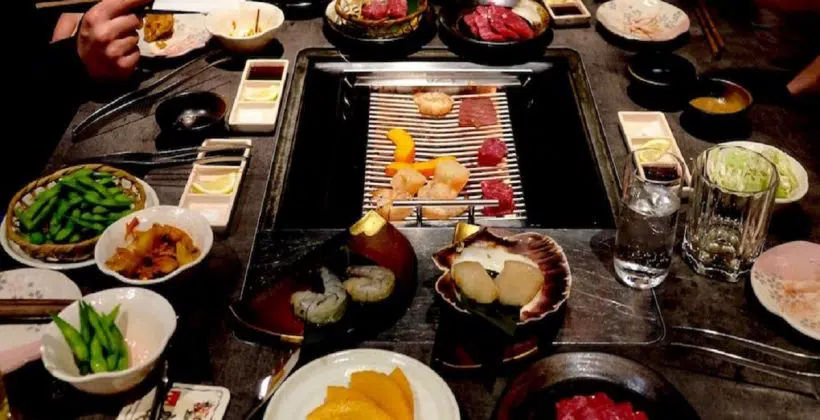
Much like the Korean BBQ concept, Ushido is the Japanese version of this BBQ experience. Guest order from a diverse menu and then grill up their meals in a BBQ station at their table. The menu is tailored for meat-lovers, but along with a huge selection of meat cuts, there is also a mixture of vegetable to grill up and a range of side dishes to order. Ushido’s interior is modern and sleek, with an array of wooden tables, with traditional BBQ stations in the middle. The first of its kind in Berlin, Ushido, is a meat lover’s dream destination.
Tisk
Get a taste of typical East-Berlin dishes with a modern twist at Tisk. This restaurant bar is setting new standards for dining and drinking in Berlin with their original creations and cutting-edge interior design.
Banh Mi Classic | CôCô Banh Mi Deli
Berlin is a city with such a huge, flourishing Vietnamese community that it was only a matter of time before the Banh Mi was made available to the hungry masses of Germany’s capital city. A Banh Mi is a traditional sandwich from Vietnam that fuses the French baguette with Vietnamese marinated meat (in this case pork) and pickled vegetables. CôCô Banh Mi Deli is the king of the dish in Berlin and reigns supreme with bold flavors and close attention to authenticity.
Zola
Zola is the Kreuzberg pizza restaurant that opened in 2015 and joined the ranks of quality Neapolitan style pizza in Berlin. With its massive, wood-fired oven, Zola dishes out some of the tastiest pizza Berlin has ever seen and has in less than six months earned its spot as one of the best pizzas in Berlin.